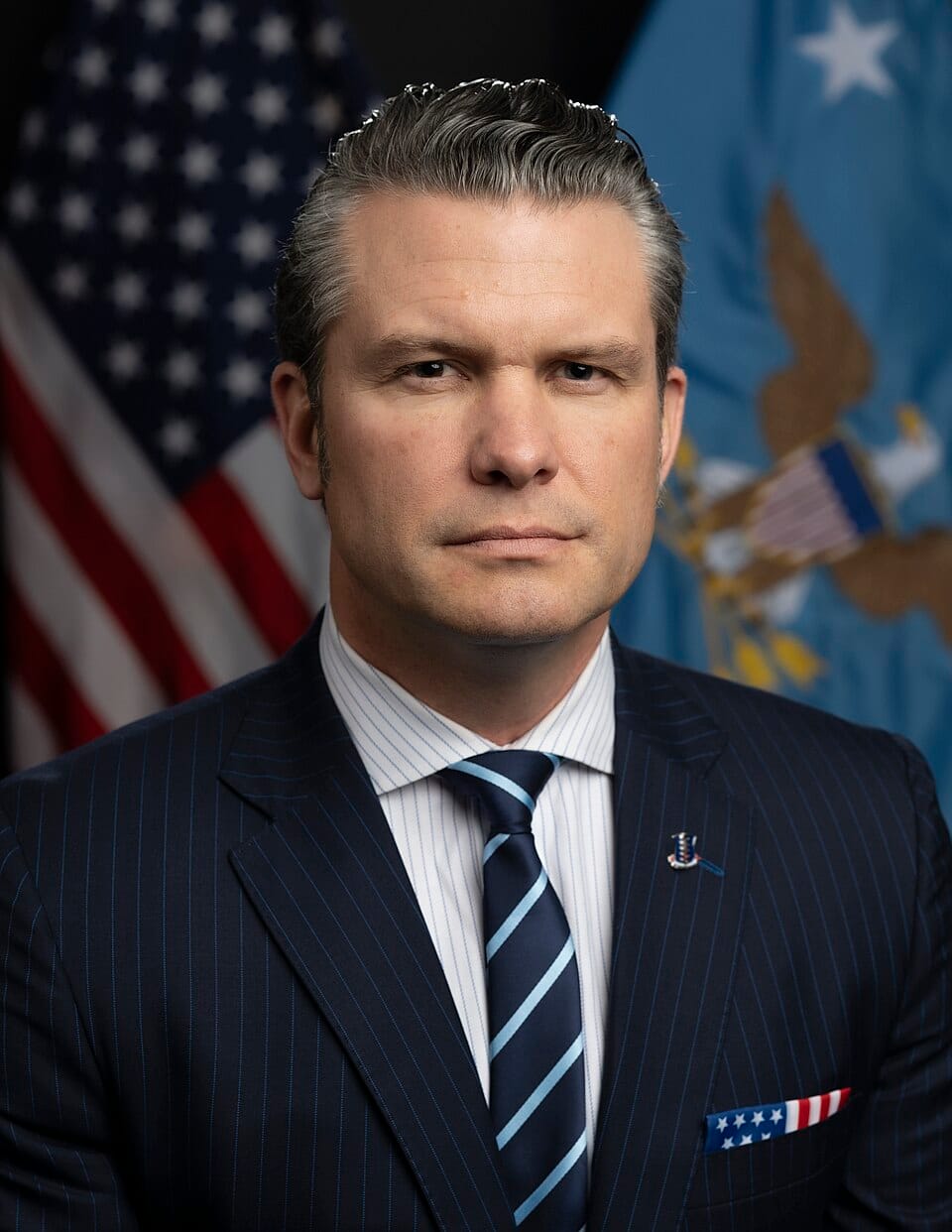
There is a French creator on Instagram named Le Tréma who has a recurring series called Est-ce que les hétérosexuels vont bien ?, “Are the heterosexuals okay?” The formula is beautifully simple. He shows us some inexplicable specimen of heterosexual behavior, watches along with the rest of us, and then delivers his verdict: Non ! I generally leave his particular corner of the internet to him, but Pete Hegseth has now produced something so perfectly suited to the format that I cannot resist borrowing it, with full credit where credit is due.
On September 30th, during his State of the Force address, Hegseth offered this description of the military culture he wants: “No fatties, no trannies, no beardos, no weirdos, no wimps, no radicals. Just warriors.” There are serious things buried in that sentence, especially when the person saying it is the civilian official responsible for the Department of Defense. But before getting anywhere near policy, can we simply acknowledge how profoundly strange the rhetoric is? This is not the language of a military readiness report. It sounds like somebody wrote the hazing rules for the world’s most hostile fraternity.
The part I can’t get over is how much obsessive masculinity, or at least his bizarre understanding of it, he managed to cram into one sentence. No obese people. No trans people. No bearded men. No weird people. No weak people. No radicals. He ostensibly wants to project toughness, discipline, conformity and physical readiness. Yet keep listening and the imagery piles up: warriors, patriotic cowboys, testosterone testing, carefully regulated male bodies and an intense concern about what qualifies as masculine enough. The result has a certain aesthetic that I am not entirely convinced Hegseth intended. Then again, he told us the goal himself. Moments after the list, he passed along the president’s standard for the troops: “Pete, central casting. I want central casting.” Sir, you are approaching a Tom of Finland casting call at considerable speed.
And then there is the spelling. When Hegseth posted the list on social media the next day, we got “beardos” followed immediately by “weirdoes [sic].” Why do the weird people receive an e while the beard people do not? “Weirdos” is the ordinary modern plural, although “weirdoes” exists as a variant, so this is not exactly a constitutional crisis. It is simply another tiny, delightful oddity in a statement already overflowing with them. Apparently even within a six-line manifesto against nonconformity, orthographic conformity was negotiable.
Which brings me back to Le Tréma. His joke works because he rarely needs to explain anything. He simply presents the evidence and asks the question. So here is my final exhibit. Almost immediately after declaring “no trannies,” Hegseth announced that the department is “colorblind, gender-neutral, and merit-based.” I could attempt to reconcile those two statements, but I think Le Tréma has developed a more efficient system. Est-ce que les hétérosexuels vont bien ? Non.